
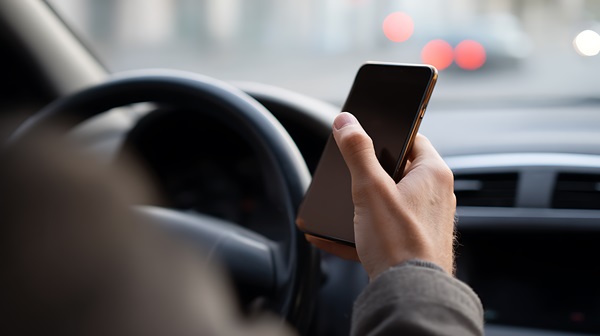
A Few Seconds Of Inattention Can Change Everything
On highways like I-44 and US-287 around Wichita Falls, crashes tied to distraction often share the same detail: no reaction. No braking. No attempt to avoid impact. That is what Texas DPS is targeting during its April enforcement campaign, where troopers are not just watching for phones in drivers’ hands, but for the driving behavior that signals attention has already been lost.
As part of Distracted Driving Awareness Month, patrols increase statewide as part of Operation CARE, with a focus on texting, failure to Move Over or Slow Down, and other signs of inattention behind the wheel. This is not a general reminder campaign. It is a concentrated enforcement period where troopers are actively identifying the kinds of decisions that lead to high-impact crashes on Texas roads.
For drivers in Wichita Falls, Lawton, and surrounding communities, the takeaway is practical. The same behaviors being cited during this campaign are the ones that show up later in crash reports, insurance disputes, and injury claims.
Consultation*
The Move Over Law and $1,250 Fines
Texas law is strict when it comes to the safety of roadside workers and emergency responders. Under the Move Over or Slow Down law, drivers must vacate the lane closest to stopped emergency vehicles, tow trucks, utility service vehicles, and TxDOT trucks. If you can't safely change lanes, you must slow down to 20 mph below the posted speed limit.
- Distraction is the Enemy: Troopers have already recorded over 5,000 violations of this law in early 2026.
- High Penalties: A first-time violation can cost you up to $1,250.
- State Jail Felony: If a distracted driver fails to move over and causes bodily injury, the offense can be elevated to a state jail felony.
When we represent victims hit in roadside or work-zone accidents, proving the driver violated these specific safety thresholds is a powerful way to establish negligence per se.
The Reality of Texas Enforcement Data
The scale of the problem is clear in the most recent data from the Texas Highway Patrol. During last year’s concentrated enforcement efforts, troopers issued more than 79,200 citations and warnings. This included thousands of speeding violations and nearly 2,000 citations for driving without insurance.
For a victim of a car accident, these numbers reflect a pattern: drivers who text are also likely to speed and ignore basic safety requirements like seatbelts. We don't just look at the crash; we look at the driver’s entire history of risky behavior to build your case.
Take the next steps. Contact us now.Why No Reaction Crashes Are More Severe
What makes a distracted driving crash in North Texas or Oklahoma so dangerous is the complete lack of reaction. When a driver is focused on a screen, they don't brake or swerve before impact. These no-brake collisions often result in:
- Full-Force Rear-End Crashes: Impact at highway speeds with zero deceleration.
- T-Bone Intersection Collisions: Missing a red light entirely while looking at a notification.
- Roadside Tragedies: Striking vehicles or pedestrians on the shoulder because the driver never "saw" the flashing lights.
These high-impact events often lead to lifelong consequences, including traumatic brain injuries and spinal trauma.
Why Insurance Companies Push Back On Distracted Driving Claims
Even when distraction seems obvious, these cases are often disputed.
Drivers rarely admit they were not paying attention. Insurance companies know this and frequently challenge whether distraction actually caused the crash. They may argue that the collision was unavoidable or attempt to shift blame to the injured person.
This is where many people lose ground in their claim.
Without strong evidence, the insurance company has more room to minimize the case. Early settlement offers may appear quickly, but they often fail to account for the full impact of the injury, especially when ongoing medical care or time away from work is involved.
The Evidence That Often Makes The Difference
Proving distracted driving is not something most injured people can take on while they are dealing with medical care, appointments, and the disruption that follows a serious crash. The work starts early, and it often determines how the insurance company evaluates the claim from the beginning.
This is where legal representation becomes practical, not theoretical. While the injured person focuses on healing, a lawyer can begin securing the evidence that may not be available later. Phone data can be lost. Video footage can be overwritten. Witnesses can become harder to locate. Waiting too long can weaken a case before it has a chance to develop.
Strong claims are often supported by:
- Cell Phone Records: Data showing calls, texts, or app activity at the time of the crash.
- Crash Scene Evidence: Skid marks, impact points, and vehicle damage that reflect a lack of reaction.
- Witness Statements: Observations from others who saw the driver’s behavior.
- Video Footage: Surveillance or dashcam recordings that capture the moments leading up to the crash.
- Accident Reconstruction: Analysis that explains how distraction contributed to the collision.
Each piece helps build a clearer picture of what happened. When combined, they can make it difficult for an insurance company to deny or downplay the role of distraction.
Take the next steps. Contact us now.FAQs About Texas Distracted Driving & Move Over Laws
Is it legal to text while stopped at a light in Texas?
Technically, Texas law (Transportation Code § 545.4251) prohibits electronic messaging unless the vehicle is stopped. However, many local ordinances in North Texas are stricter, and the moment you move, you are in violation. More importantly, being distracted at a light can lead to accidents the second the light turns green.
How does the Move Over or Slow Down law work?
If you see an emergency vehicle, tow truck, or utility vehicle with flashing lights on the shoulder, you must move out of the lane closest to them. If you can't move over safely, you must slow down to 20 mph below the posted limit. If the limit is 25 mph or less, you must slow to 5 mph.
What if the other driver was using their phone for GPS?
Texas law allows for GPS use, but if that use caused the driver to swerve or fail to brake, it is still considered negligence. Being legally allowed to look at a map doesn't excuse a driver from the responsibility to operate their vehicle safely.
Can I get a driver's phone records after a crash?
You can't get them on your own, and insurance companies won't give them to you. These records require a legal subpoena. Our firm moves quickly to secure this data before the carrier deletes it.
Get a Team That Takes Your Case Personally
Insurance companies move quickly to minimize distracted driving claims. They may argue the crash was unavoidable or try to offer a low settlement before you’ve even finished medical treatment. Hoover Rogers Law, LLP doesn't back down.
With over 25 years of combined experience and a $1.49 million truck accident recovery on our record, we have the resources to subpoena phone records and use accident reconstruction to prove the truth.
We don't treat you like a number. We treat you like family. If you've been hurt, contact us today for a free consultation.
“I highly recommend Hoover Rogers Law LLP. Ben Hoover is an amazing attorney who truly sets himself apart by taking a personal interest in his clients and their cases. He does not treat people like a number, and you can tell he genuinely cares. He is knowledgeable, thoughtful, and a pleasure to work with. If you are looking for an attorney who combines skill with personal attention, Ben Hoover is an excellent choice.” - AB, ⭐⭐⭐⭐⭐
Take the next steps. Contact us now.