
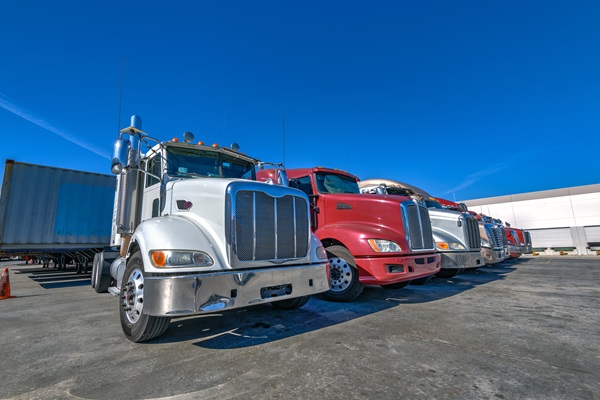
We’ve seen the devastation that follows when undertrained truckers are sent onto the road too soon
The American trucking industry is like the circulatory system of the nation’s economy. But each year, roughly 100,000 large truck accidents occur on U.S. highways, killing about 5,000 people. Those aren’t just numbers; they’re lives lost in crashes that could often have been prevented.
Beneath the surface of this crisis lies a quiet but devastating shift in how America trains the men and women who drive the 80,000-pound machines that keep our country moving.
Consultation*
How has overall safety enforcement increased the risk of truck accidents?
Texas has seen near-record highs in fatal truck accidents within the last few years. This comes as federal safety enforcement has become more relaxed. That includes a 60% drop in efforts to remove risky operators since January 2025. Additionally, nearly 70 cases that would have shut down negligent trucking companies were never carried out in 2025.
In one tragic incident back in June, five people, including a family of four, died in a truck crash on Interstate 20 when a big rig failed to stop at a construction zone. An investigation found that the driver had fallen asleep at the wheel. The company that employed the driver has had prior safety violations, including falsification of hours-of-service records, maintenance records, and inspection records.
What changed in how truck drivers are licensed?
For decades, earning a Commercial Driver’s License (CDL) required weeks of instruction from state-approved schools where safety, compliance, and technical skills were taught. But everything changed in February 2022, when the Federal Motor Carrier Safety Administration (FMCSA) launched a self-certification database for CDL trainers. The idea was to modernize and streamline the process. The result was a loophole big enough to drive a semi through.
That change allowed almost anyone to register as a “training provider,” even if they had no state license, no verified credentials, and no established safety program. It created two paths to becoming a truck driver: one legitimate and one dangerously lax.
On one side are roughly 2,100 state-licensed CDL schools. That includes 160 Driving Academy, which offers more than 160 hours of structured training before a driver ever touches a highway. On the other side are more than 32,000 self-certified “training providers” who may give a few hours of orientation (*or none at all) before sending students to the DMV to take their test. The difference between these two experiences can be the difference between a safe trip and a deadly crash.
Take the next steps. Contact us now.What are CDL mills, and why are they a problem?
CDL mills are low-quality operations that push out new drivers with minimal instruction, sometimes exploiting language barriers or economic desperation. According to Steve Gold, founder of 160 Driving Academy, the self-certification system has opened the door to chaos.
“The feds come in, they create this self-certification database, and you can register to be a CDL trainer at the federal level. And employers, if you’re an employer, you’re exempt. You don’t have to be licensed in the state. So there are 32,000 registered federal training providers who can provide training for CDLs,” Gold explained.
In some states, oversight has disappeared entirely. Indiana, for example, stopped enforcing its own licensing standards after the federal registry was introduced. That means there are places in America where anyone from a trucking company to a small business with one truck can claim to run a CDL training program.
How has deregulation affected safety on U.S. highways?
The results have been devastating. In 2023 alone, the National Highway Traffic Safety Administration reported more than 153,000 crashes involving large trucks. Those crashes killed 5,472 people, which is a 40% increase from 2014. The fatality rate has stayed high through 2024.
To put that in perspective, your odds of dying in a crash involving a commercial truck are roughly 20 times greater than dying in a commercial airline accident.
The difference is training. Pilots go through thousands of hours of rigorous instruction and simulation before ever carrying passengers. Many new truck drivers, by contrast, get less than a week of training before taking control of vehicles weighing as much as 40 tons.
One tragedy in Fort Pierce, Florida, illustrates the danger. A driver who couldn’t read or speak English obtained a CDL and later caused a crash that killed a family of three. That driver had somehow passed through the system that now allows underqualified, undertrained individuals to operate massive vehicles on public roads.
When 160 Driving Academy tested experienced commercial drivers for major carriers, the results were equally grim. Nearly half scored below 50% on proficiency exams, which would disqualify them from most safety-focused companies. Yet many of these drivers found work with smaller operations lacking the resources or oversight to evaluate their skills.
Why did the government loosen training requirements?
The deregulation of driver training didn’t happen by accident. For years, trucking industry lobbyists have pushed for looser requirements by arguing that the nation faces a chronic driver shortage. By making it easier and faster to obtain a CDL, they claimed, the industry could fill seats and keep freight moving.
But that strategy came at a cost. Instead of solving the shortage, it flooded the market with inexperienced drivers. Insurance premiums have risen, crash rates have climbed, and safety-conscious carriers have been forced to compete with low-cost operators cutting corners. The supposed solution has only deepened the problem.
Take the next steps. Contact us now.Can the CDL training system be fixed?
The good news is that this isn’t an impossible problem. CDL training can be solved with a few straightforward reforms. Here are some examples of how:
- Require all federally registered training providers to hold valid state licenses.
- Conduct random audits and enforce meaningful penalties for false certification.
- Restore state-level oversight where it has been abandoned.
- Create uniform national standards for training hours and curriculum.
What’s at stake for America’s roads and drivers?
Trucking is the backbone of the U.S. economy. Every piece of produce, every box on a store shelf, every construction material gets there because a driver hauled it. But with that responsibility comes risk. Americans should be able to trust that the person behind the wheel of an 18-wheeler has received real training, not a crash course in name only.
Fixing this crisis isn’t just about protecting truck drivers or motorists. It’s about restoring integrity to an industry that keeps our country running. If we can close the loopholes, enforce standards, and value safety as much as speed, we can steer the trucking industry back on course.
Injured in a truck wreck? Let Hoover Rogers Law help you get back in the driver’s seat
At Hoover Rogers Law, LLP, our Texas and Oklahoma truck accident lawyers represent victims injured by unqualified or improperly trained commercial drivers. We investigate unsafe trucking companies and fight for accountability and fair compensation.
A collision with a semi-truck can turn your world upside down in seconds, like being hit by a freight train you never saw coming. When the truck driver behind the wheel lacked proper training, or the company cut corners on safety, you deserve justice. Our law firm knows how to take on powerful trucking companies and their insurers to demand the compensation you deserve to rebuild your life.
If you were injured in a truck accident anywhere near Wichita Falls, TX, or Lawton, OK, contact us online to schedule your free consultation. Evidence disappears quickly, and the trucking company already has lawyers working against you. So, don't hesitate.
“Grant was quick to respond and very professional. He is well-rounded in his knowledge with law and got us the answers we needed. We would most definitely recommend him to anyone needing a good and hardworking lawyer.” – Jenna, ⭐⭐⭐⭐⭐
Take the next steps. Contact us now.